Sheet metal pattern development software: how to choose, and what changes between a desktop program, a phone app and an online calculator
Updated on 17 September 2026
There are three families of tool for developing sheet metal: the program installed on a computer, the phone app with ready-made layouts, and the online calculator. Each solves a different problem, and the wrong choice is the one you discover on the shop floor, with the plate already cut. This guide says what to ask before choosing, and where Planichapa fits, with the facts about the competitors checked on their websites in September 2026.
The five questions
- Which parts does it develop? Everyone does a cone and a rolled shell; the difference shows on the offset pipe branch, the conical Y piece, the cone with a branch hole. Count the ones your shop makes.
- Does it offset the thickness, and how? Every serious development is on the neutral axis: π × (D − t) on the shell and (t/2) × cos α on the cone. A program that asks only for the diameter, with no thickness, delivers plate left over at the seam.
- What comes out at the end? Numbers on screen are for checking; a PDF template to scale is for marking out; DXF is for the cutting table. If the shop has plasma or laser, the DXF is the product.
- Where does it run? An installed program is tied to one Windows computer; an app is in your pocket, but on a small screen; an online calculator runs on anything with a browser, including the phone on the shop floor, with nothing to install.
- How does it charge? Perpetual licence, monthly subscription, annual purchase or free with a limit. What matters is the cost per part calculated at your volume, and whether the tool keeps working when you stop paying.
What each family does well
Desktop program
It is the classic tool: a large catalogue, native DXF, runs without internet. CALDsoft, a Brazilian product, says it covers most of the shapes used in plate fabrication and has tools for free-form transitions and intersections; it distributes a demo version and sells by quotation. Plate 'n' Sheet, from Australia, is a standalone Windows program, with no other software required: a single-computer licence at A$990, published on its site, with add-on modules at A$520 and extra workstations at A$100, paid once. CALDsoft sells in three plans by number of shapes (15, 100 and 235) and does not publish a price. Both live on one computer.
Phone app
Ready-made layouts with the dimensions and the step by step, in your pocket. Tracefacil, for example, is a Brazilian Android app with over 60 layouts, manuals and tutorials, on a monthly or annual subscription, with a few layouts free. It is the option for someone who wants to look up how a part is laid out, more than to generate a file for a machine.
Online calculator
It runs in the browser, with nothing to install, and the calculation is done on the server: the same account in the office and on the phone on the shop floor. This is Planichapa's family: 50 parts, neutral-axis calculation on all of them, a 3D view, a PDF template and DXF for cutting, with 20 calculations a month free; full access is a one-off 12-month purchase, £69, €69 or US$79 depending on your region, by card. The four most requested parts (cone, cylinder, 90° segmented bend and pipe branch) are calculated with no account, straight on the part page.
Comparison, with the facts checked
| Planichapa | CALDsoft | Plate 'n' Sheet | Tracefacil | |
|---|---|---|---|---|
| Type | online calculator | desktop program | desktop program | Android app |
| Parts | 50, one public page per part | most plate-fabrication shapes, plus free-form transitions and intersections | common shapes, list on the site | over 60 layouts |
| Neutral axis | on every part, with the cone offset along the surface normal | not stated on the site | not stated on the site | not applicable: layouts |
| Output | 3D, PDF to scale, DXF | DXF, depending on the product | DXF, depending on the product | layout with dimensions |
| Where it runs | any browser, nothing to install | computer | computer, standalone program | Android phone |
| Pricing | free up to 20 calculations a month; £69, €69 or US$79 for 12 months, one-off purchase | by quotation, in three plans by number of shapes (15, 100 and 235), with a demo | A$990 per computer, published; add-on modules A$520, extra workstations A$100; one-off | monthly (R$ 74.90) or annual subscription |
| Try without signing up | yes, four parts on their own pages | demo to download | trial version, only the right cone unrestricted | a few layouts free |
The data on the other products is what their websites publish in September 2026; prices and coverage change, and it is worth checking at the source before deciding. What Planichapa does is spelled out in full in how we check.
When Planichapa is not the choice
- No internet on the shop floor. The calculation is on the server; no connection, nothing. A PDF template downloaded beforehand gets you through the day, but it does not replace a program installed in a shop with no signal.
- A part outside the catalogue. There are 50 shapes; a program with free-form transitions, defined point by point, covers the one-off part no catalogue has. If that is your production, the desktop program earns its price.
- A large volume of DXF per day. Full access is unlimited, but anyone generating dozens of files a day integrated with CAD and nesting is in desktop-program territory.
How to test any of them in ten minutes
- Take a rolled shell you have already made: diameter, height and thickness. The plate must come out π × (D − t) long. If it comes out π × D, the tool does not offset the thickness.
- Ask for a cone of 800/1200/800 in 3 mm plate. The radii must come out 1643 and 2468 mm and the sector 87.3°. A difference of tenths is the offset on the normal; a difference of millimetres is an error.
- Ask for a 90° segmented bend with 4 gores: it must give 2 half gores and 3 full ones, with the full gore twice the height of the half.
- Export the DXF and open it in CAD or on the machine: the cut lines must be on a separate layer from the bend and weld lines.
Frequently asked questions
- What is the best sheet metal pattern development software?
- The one that covers the parts your shop makes, offsets the thickness on the neutral axis, delivers DXF if you cut by machine, and fits your cost per part. Desktop program, phone app and online calculator solve different problems; the ten-minute test above says which one adds up.
- Does Planichapa replace CALDsoft or Plate 'n' Sheet?
- For the 50 parts in the catalogue, with DXF, PDF and 3D, yes, and with nothing to install. For free-form transitions defined point by point, or for working offline, no: those are cases for the desktop program.
- Is there free pattern development software?
- Planichapa calculates 20 parts a month free, with 3D and PDF, and four parts with no account at all. The desktop programs offer a demo or a trial; the apps usually unlock a few layouts.
- Do I need DXF, or is the PDF enough?
- If you mark out and cut by hand, the PDF template at 1:1 is enough. If you cut on plasma, laser or CNC oxy-fuel, the DXF is what the machine reads, and it is what separates the free plan from full access.
Parts in this guide
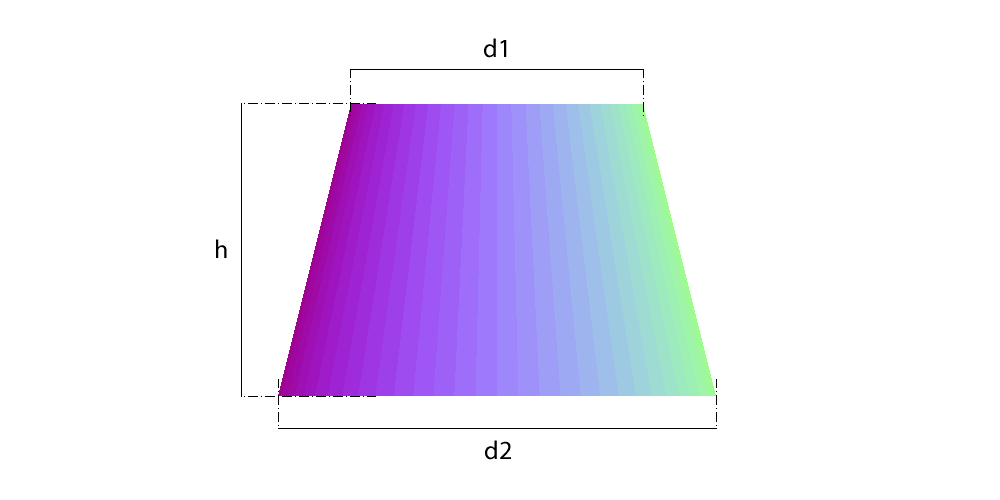
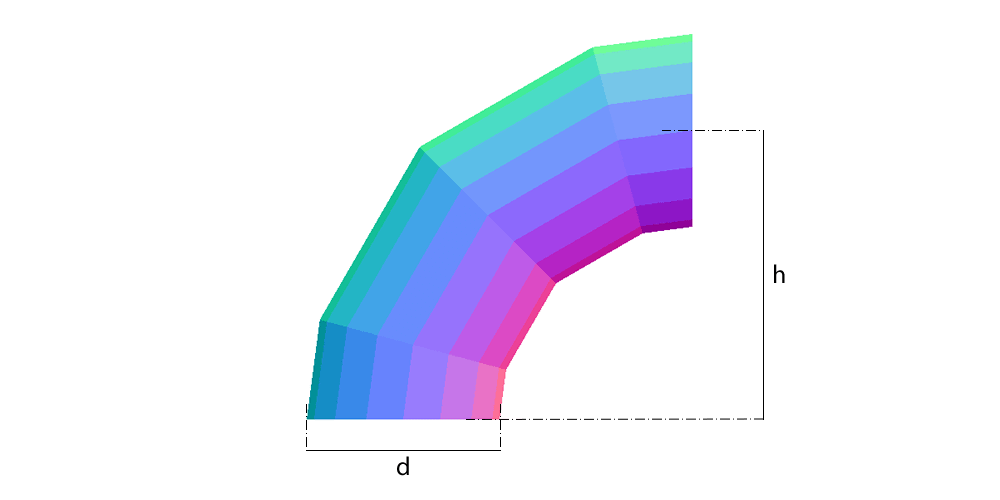
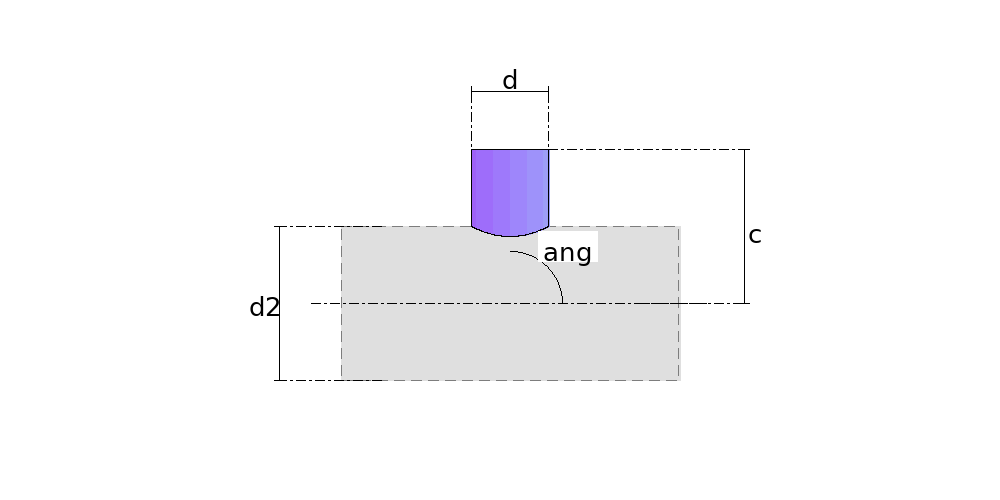
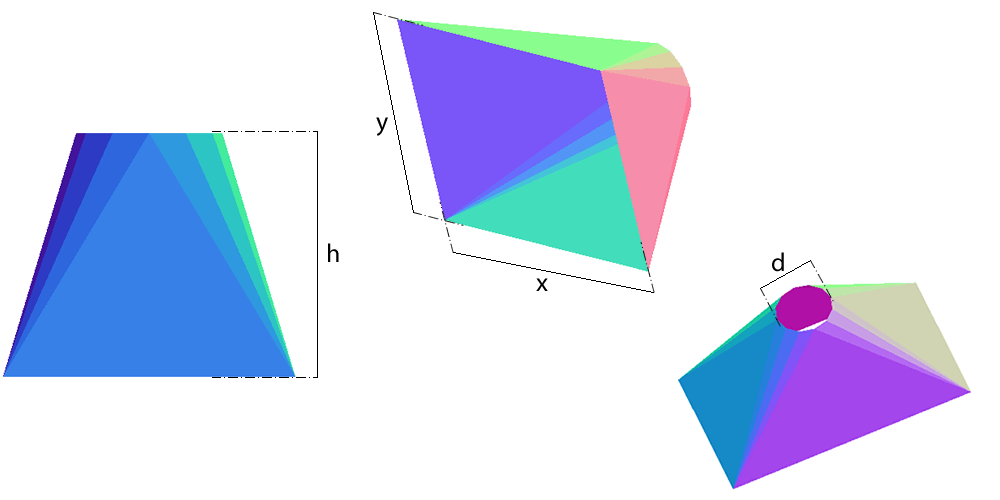
Other guides
- How to develop a cone (frustum) in sheet metal: formula, sector radii and angle, step by step
- Lobster back bend (segmented 90° elbow): gore angles, cut heights and how many plates
- Pipe saddle development: how to lay out a pipe-to-pipe branch (tee) at 90 and 45 degrees
- Square to round transition: development by triangulation, step by step
- The neutral axis of plate: why every development uses D − t, and the bend deduction
- Sheet metal glossary: the terms of marking out and pattern development in plate fabrication
- How we check the Planichapa calculations, and who is behind them
- How to lay out a mitre-cut pipe: paper template, sine wave and ordinate table
- Plate 'n' Sheet alternative: Planichapa develops sheet metal parts in the browser, with the price on the page
- Steel plate weight per m², gauges and stock plate sizes: weight table and formula
- Eccentric and concentric reducers: which one to use and how each one develops on plate