Smoker stack and firebox templates: the cuts where pipe meets the cook chamber, in inches
Updated on 01 November 2026
An offset smoker is a cook chamber, a length of pipe or a rolled shell, with a firebox at one end and a stack at the other, and every joint between them is a pipe meeting a curved shell. Builders usually find those cuts with a cardboard tube trimmed until it sits. The pages below draw them from the sizes instead: set the page to inches and every result comes in fractions to the nearest 1/16 in, the thickness field takes the wall in inches or a gauge from the list, and a free account adds the full-size template on Letter sheets, to wrap round the pipe, and the DXF for a plasma table.
This page says which page draws which joint, with worked figures for a 24 in cook chamber, and what the site does not do: size the smoker, or cut anything into the domed end of a tank.
Which page for which joint
| The joint | Page | What it draws |
|---|---|---|
| Stack standing on top of the cook chamber | Pipe Branch (Tee) | The saddle cut on the end of the stack, as a band to wrap round it |
| The hole for that stack | Cylinder with Branch Hole | The cook chamber rolled from plate, with the hole cut in the flat sheet; on pipe, scribe the hole round the cut stack instead |
| Stack drawing from grate level, out of the side of the cook chamber below its centreline | Offset Pipe Branch | The cut on the end of a stack whose axis misses the cook chamber's |
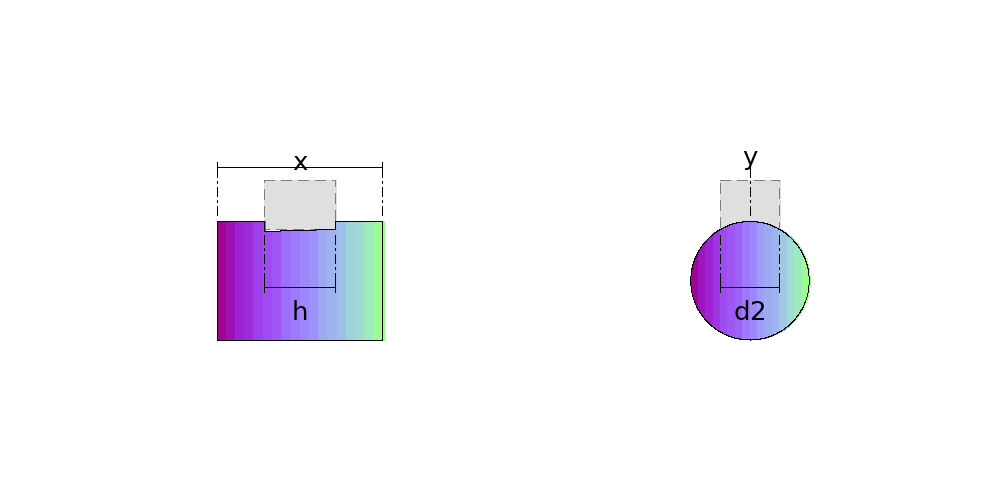
| Square firebox throat into the side or the bottom of the cook chamber | Rectangular Tap on Pipe | The four walls of the throat in one strip, coped to sit on the shell |
| The opening for that throat, or a door cut out of a rolled cook chamber | Cylinder with Rectangular Hole | The shell rolled from plate, with the rectangular opening cut in the flat sheet |
| Round firebox meeting the cook chamber square, centred or dropped below its centreline | Pipe Branch (Tee) or Offset Pipe Branch | The saddle cut on the end of the firebox pipe |
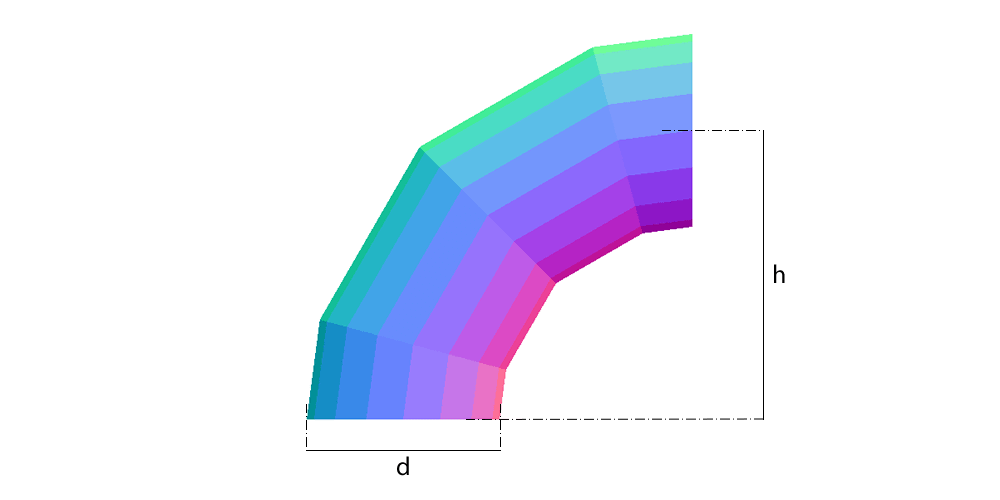
| Elbow in the stack | 90° Segmented Bend | The gores of a lobster-back elbow; other angles on the Segmented Bend |
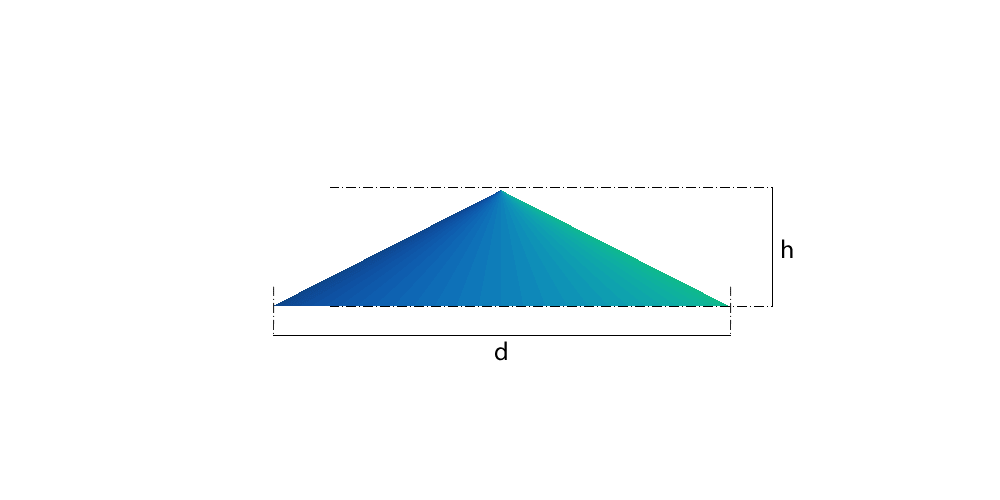
| Cap on the stack | Chinese Hat | The flat cone of the rain cap, from its rim and its height |
| A stack or a firebox into the domed end of a tank | None | Not covered: see the last section |
| Sizing the cook chamber, the firebox, the opening and the stack | None | A pit calculator or a set of plans does that; the cuts come after |
The stack on top of the cook chamber
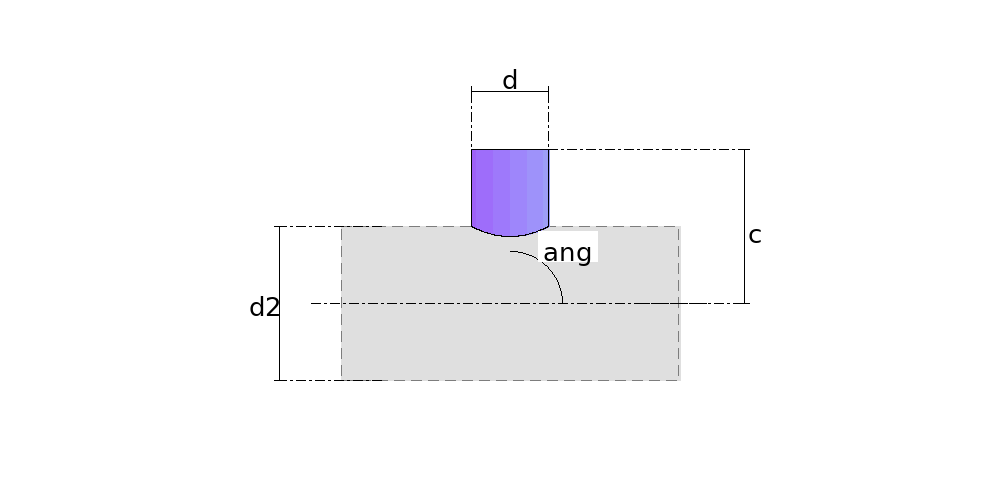
A 6 in stack in NPS 6 pipe, 6-5/8 in outside (168 mm) with a 0.280 in wall, standing on a 24 in cook chamber (610 mm). On the Pipe Branch (Tee) page the stack is the branch and the cook chamber the main pipe. C, from the cook chamber's axis to the end of the branch, only sets how tall the band comes out: 15 in, 3 in above the top of the shell, keeps the template short.
| Field | Value |
|---|---|
| D, the stack | 6.625 |
| D2, the cook chamber | 24 |
| C | 15 |
| ANG | 90 |
| DV | 32 |
| Thickness | 0.28, the wall of the stack |
| The band | 19-15/16 × 3-7/16 in (506 × 87 mm) |
| Full-size template | 3 Letter sheets |
Wrap the band round the end of the stack, its straight edge square to the pipe, mark along the curved edge and cut: the stack then sits on the shell. The page's fit is set-on, the stack resting on the outside of the shell over a hole the size of its bore; for a stack pushed through the wall instead, pick set-in on the page, and the hole becomes its outside diameter.
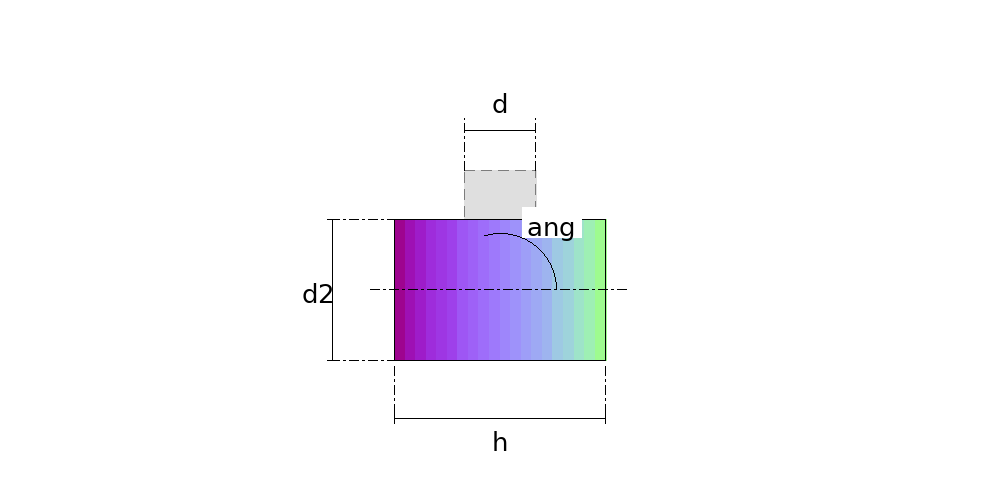
On a pipe cook chamber, hold the cut stack in place and scribe the hole round it. On a cook chamber rolled from plate, the Cylinder with Branch Hole page draws the whole shell with the hole in place, to cut before rolling: a 24 × 48 in chamber in 3/8 in plate is a 74-1/4 × 48 in sheet (1885 × 1219 mm).
The stack at grate level
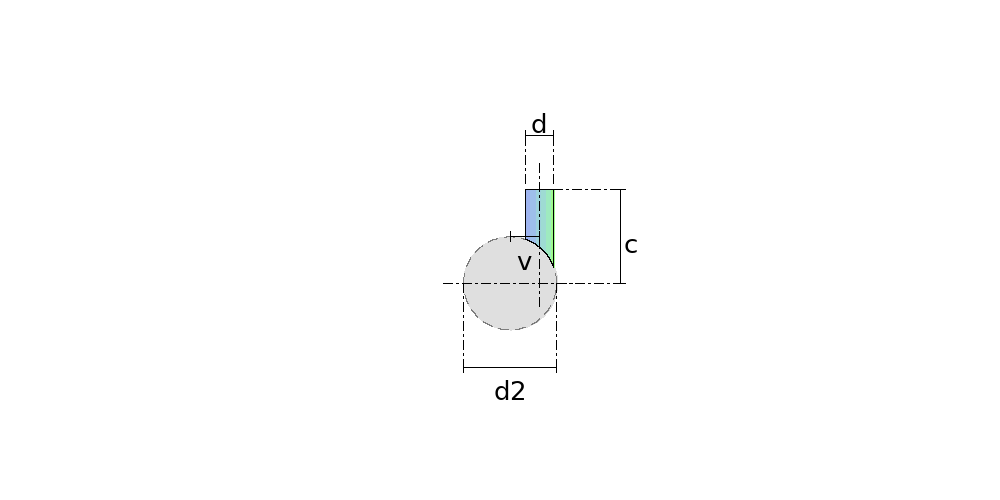
Many builders draw the smoke from grate level: the stack leaves the side of the cook chamber below its centreline and turns up through an elbow. That stack's axis misses the cook chamber's, which is the Offset Pipe Branch. The same 6-5/8 in stack on the 24 in chamber, 6 in below the centreline (V 6), with C 16 from the chamber's axis to the end of the stub, is a 19-15/16 × 8-1/4 in band (506 × 210 mm), 3 Letter sheets.
The elbow that turns it up is the 90° Segmented Bend, in as many gores as you like. Its hole in the shell is scribed round the cut stub, as on top.
The firebox throat
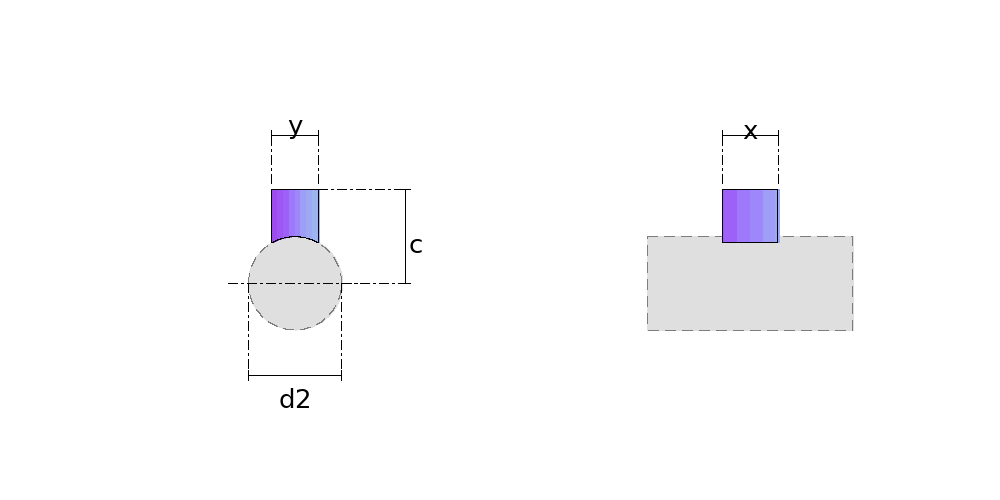
When a square firebox meets the side or the bottom of a round cook chamber, the throat between them is a short rectangular duct coped to the shell. The Rectangular Tap on Pipe page draws its four walls in one strip: a 12 × 8 in throat (305 × 203 mm), 12 in along the cook chamber and 8 in across it, its outer end 16 in from the chamber's axis, in 1/4 in plate, is a 39 × 4-5/8 in strip (991 × 118 mm), 6 Letter sheets. The two walls along the chamber come out cut straight, and the two across it in the curve of the shell.
The opening in the shell: on a cook chamber rolled from plate, the Cylinder with Rectangular Hole page cuts it in the flat sheet, and the same page puts a door opening in the sheet before it is rolled. On pipe, scribe it round the throat. A firebox that butts against the flat end plate of a pipe chamber needs none of this: the opening there is a plain rectangle.
What the site does not do
- Size the smoker. The volume of the cook chamber and the sizes of the firebox, the opening between them and the stack come from a pit calculator, such as Feldon's, or from a set of plans; the pages here take the sizes you settle on.
- Cut into the domed end of a tank. A propane tank's heads are formed, and a stack or a firebox meeting one is a cut through a dome. The Nozzle on a Spherical Head page draws a nozzle parallel to the head's axis only; a stack standing up from a tank lying on its side is square to that axis, and no page draws it yet. Scribe it from the tank.
- Flat work. Doors, baffles, tuning plates, grates and charcoal baskets are flat plate, with nothing to develop.
For plasma or laser cutting, the free account exports 1 part a month in DXF; unlimited DXF export is the paid full access.
Frequently asked questions
- How do I cut the hole for a smoker stack?
- On a pipe cook chamber, cut the end of the stack first, with the band from the Pipe Branch (Tee) page, then hold it in place and scribe round it. On a cook chamber rolled from plate, the Cylinder with Branch Hole page cuts the hole in the flat sheet before rolling. Set-on, the hole is the bore of the stack; set-in, its outside diameter.
- Can it lay out a stack or a firebox on the end of a propane tank?
- Not yet. The heads of a tank are domed, and the one page for a nozzle on a dome draws it parallel to the head's axis only. Scribe those joints from the tank.
- Does it size the smoker?
- No. Size the cook chamber, the firebox, the opening and the stack with a pit calculator or a set of plans, then come here for the cuts.
- What about the elbow and the cap on the stack?
- The elbow is the 90° Segmented Bend, in as many gores as you like, and the cap is the Chinese Hat, from its rim and its height.
- Is the smoker layout free?
- The figures and the drawing need no account. The full-size template takes a free account, which also exports 1 part a month in DXF; unlimited DXF export is the paid full access.
Parts in this guide
Other guides
- How to develop a cone (frustum) in sheet metal: formula, sector radii and angle, step by step
- Lobster back bend calculator (segmented 90° elbow): gore angles, cut heights and how many plates
- Pipe saddle calculator and development: how to lay out a pipe-to-pipe branch (tee) at 90 and 45 degrees
- Square to round transition: development by triangulation, step by step
- The neutral axis of plate: why every development uses D − t, and the bend deduction
- Sheet metal glossary: the terms of marking out and pattern development in plate fabrication
- How we check the Planichapa calculations, and who is behind them
- LITIO alternative: Planichapa develops sheet metal parts in the browser, nothing to install, now that LITIO2 is no longer sold
- How to lay out a mitre-cut pipe: paper template, sine wave and ordinate table
- Plate 'n' Sheet alternative: Planichapa develops sheet metal parts in the browser, with the price on the page
- Steel plate weight calculator, weight per m², gauges and stock plate sizes: table and formula
- Pipe ovality: a calculator, the formula, a worked example, the limits the codes use and how to measure it in the shop
- Sheet metal pattern development software: how to choose, and what changes between a desktop program, a phone app and an online calculator
- Eccentric and concentric reducers: which one to use and how each one develops on plate
- Roller chain size chart: ANSI, ISO 606, motorcycle and bicycle chain pitch and roller diameter
- Sprocket dimensions: pitch diameter, outside and root diameter, tooth form and a pitch diameter chart
- Bolt circle layout: the position of each hole, the chord between holes and a chord chart
- Chain length and sprocket ratio: the formulas, a worked example and how many links to cut
- Screw flight calculator: the flat blank of a screw conveyor flight (auger), with the formula and a worked example
- Plate rolling calculator: the blank length of a rolled shell, with the formula, a chart and a worked example
- Tube notching template generator: a printable coping template for any tube, angle and offset
- Dished head calculator: depth, volume, blank diameter and weight of torispherical, 2:1 elliptical and hemispherical heads
- Cone template generator: a printable full-size cone template for hoppers, funnels and reducers
- Pie cut calculator for exhaust and tube bends: saw angle, pie lengths and a wrap-around template
- Duct transition layout: square to round duct, centred, offset or flat on one side
- Pipe template, printable at full size: tee saddle, 45° lateral and mitre cut for every pipe size from NPS 1/2 to 12
- Register boot layout: from a floor, wall or ceiling register to a round duct, in inches
- Plenum box and plenum transition layout: the sides, the end cap, the collar and the transitions