Transition development
One opening becomes another: square to round, round to oval, oval to rectangle, rectangular reducer, pyramid frustum, angular boot and discharge chute. Almost all are solved by triangulation, with the true length of every line.
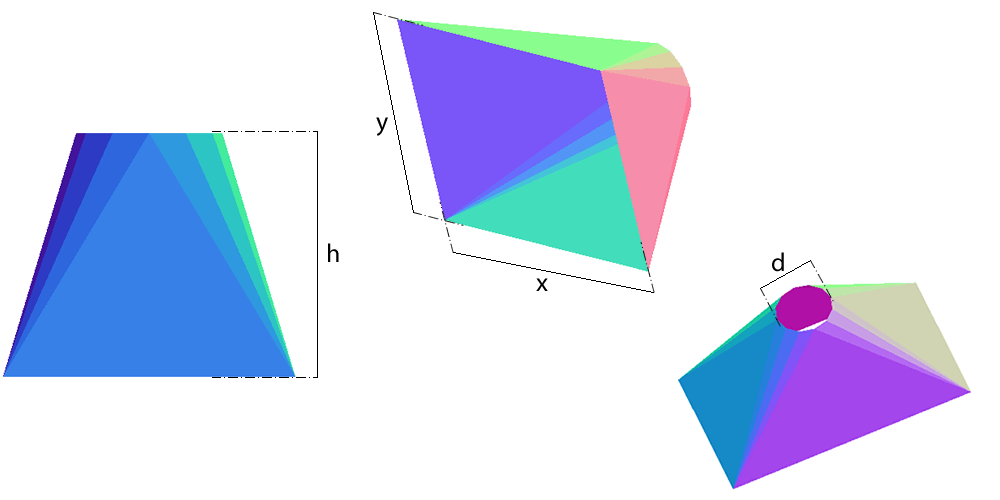
Square to Round
Four flat corner triangles alternating with four conical sectors that carry the curve. Only triangulation solves it — there is no direct formula.
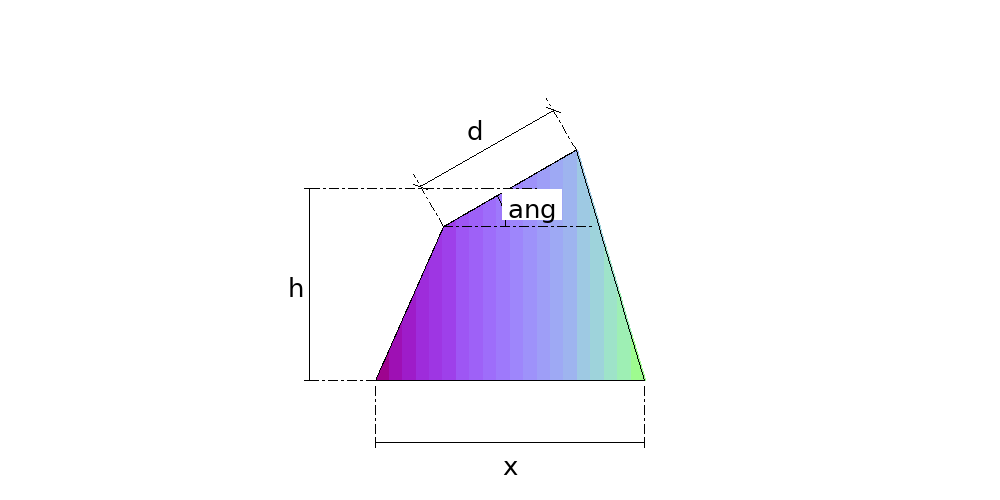
Inclined Square to Round
Square to round with the circular mouth tilted over the centre of the base. Symmetric about the line of steepest tilt, so half the pattern is mirrored.
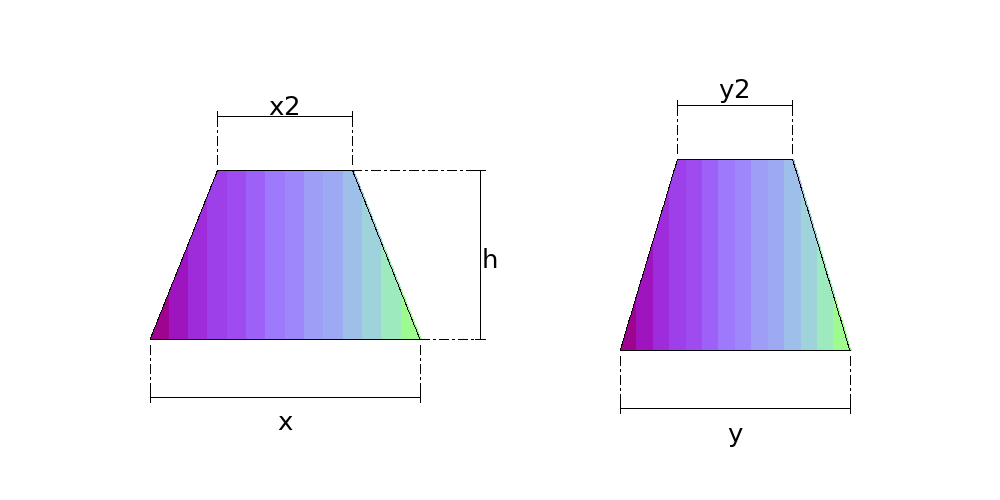
Rectangular Transition
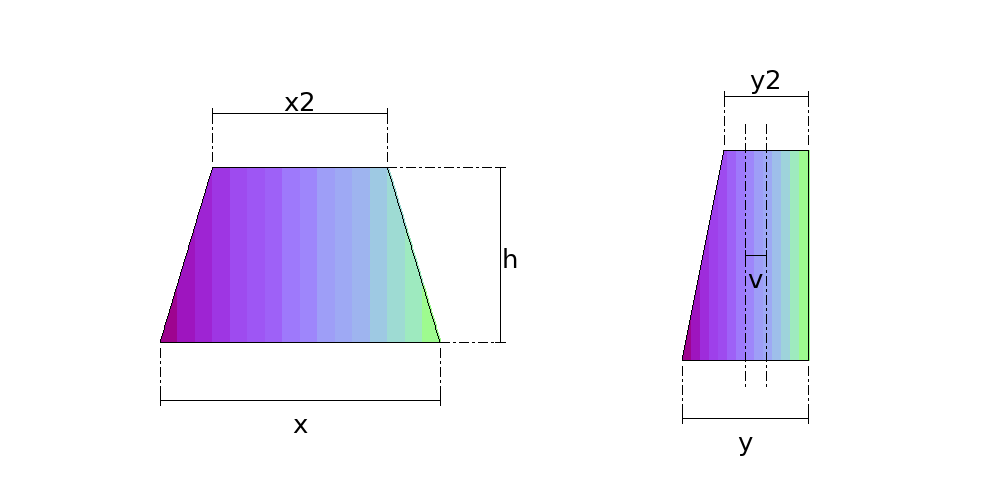
The pyramid frustum: a reducer between two rectangular mouths. Every face is a flat trapezoid, so its pattern is the face itself — no approximation.
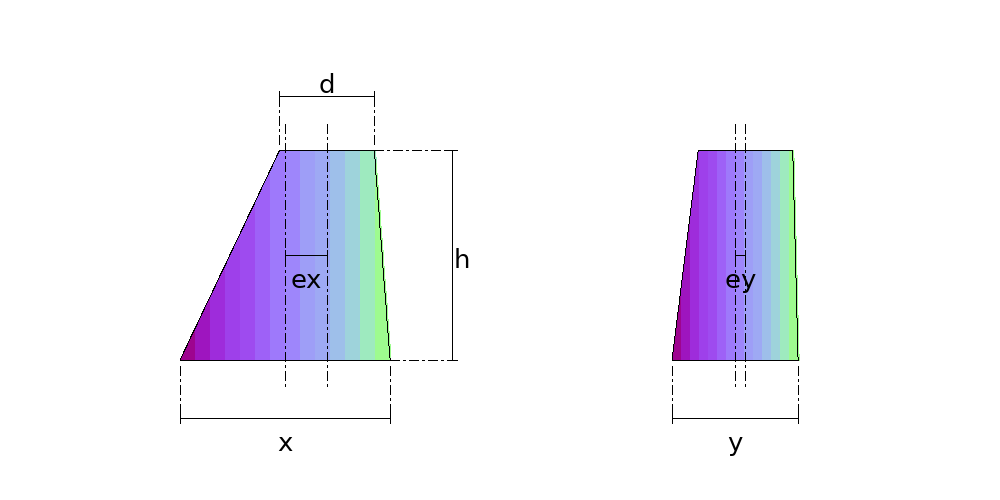
Eccentric Rectangle to Round
Rectangle to round with the round mouth off centre. Every corner has its own true lengths, so the pattern has to be walked right around — no mirroring.
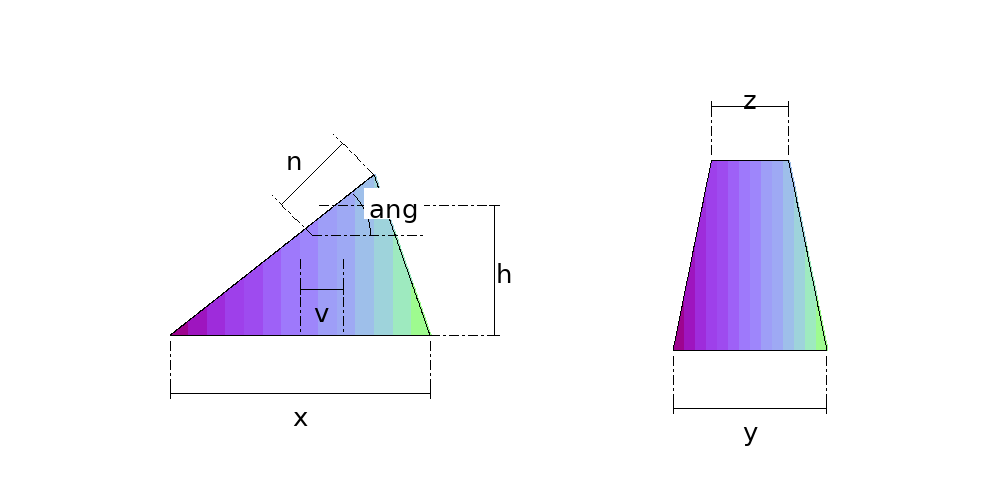
Discharge Chute
A rectangular hopper with its outlet tilted and off centre — the spout the material drops through. The faces are skew, so the pattern is triangulated.
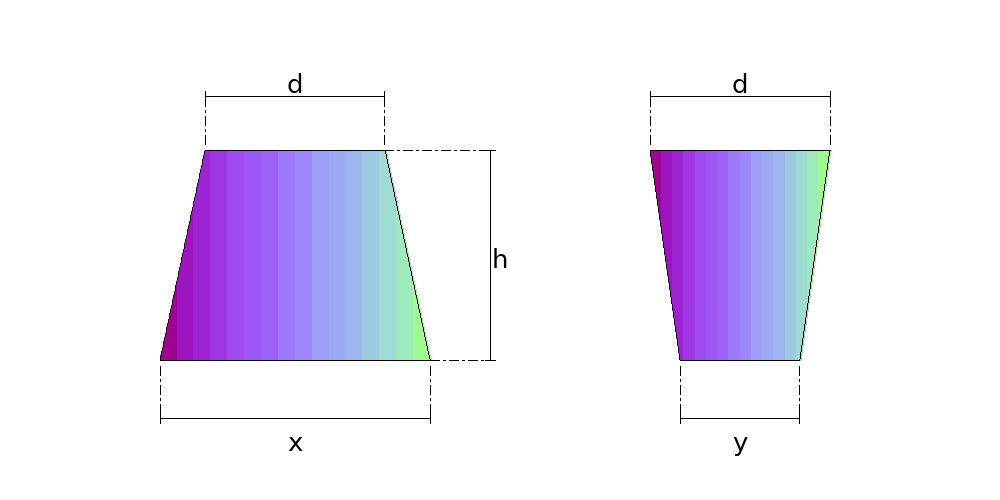
Round to Oval
Round on top, flat oval below — the duct that has to get through a shallow void. The corners are arcs, so a triangulated strip runs to each one.
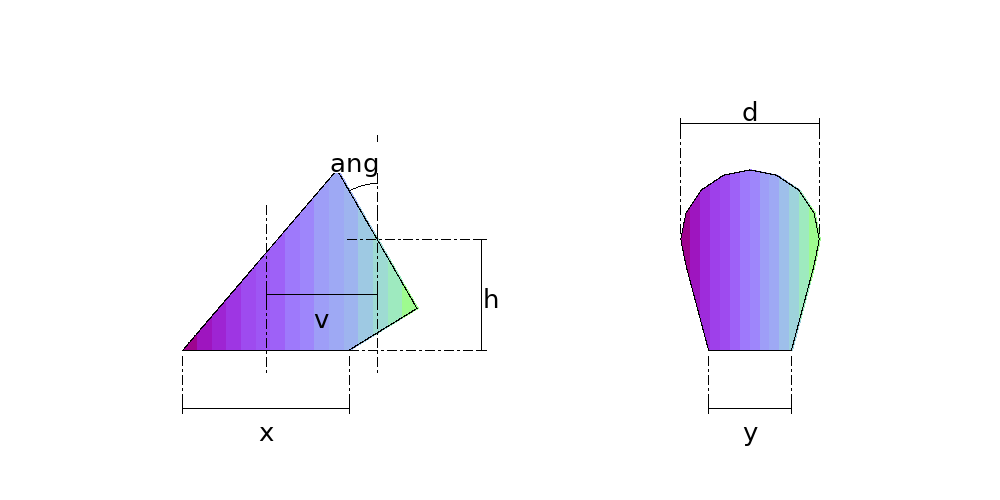
Angular Boot, Rectangle to Round
A rectangular mouth below and a round pipe leaving sideways. Its round mouth is not a circle — it is the angled cut of the pipe, so it is an ellipse.
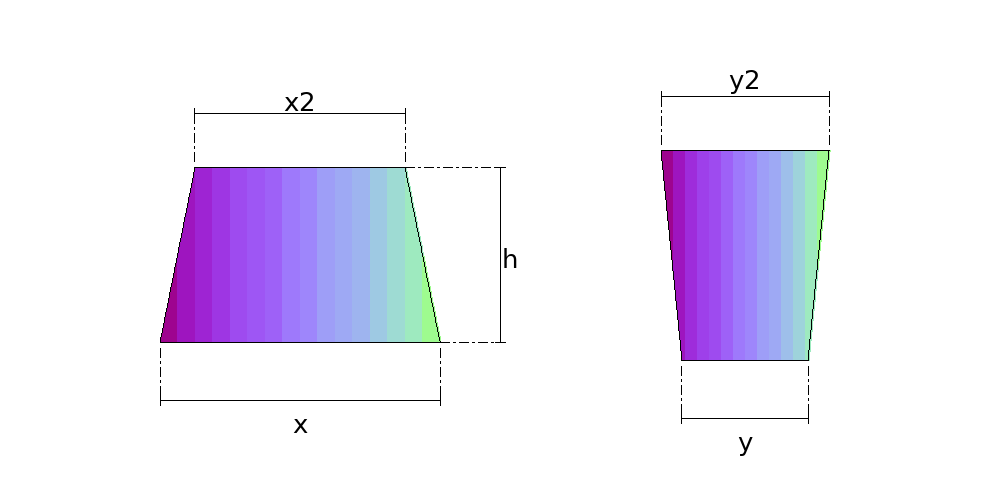
Obround to Rectangle
The other end of the round-to-oval job: the flattened duct gets through the low gap, then has to meet the rectangular frame of a filter or a fan.
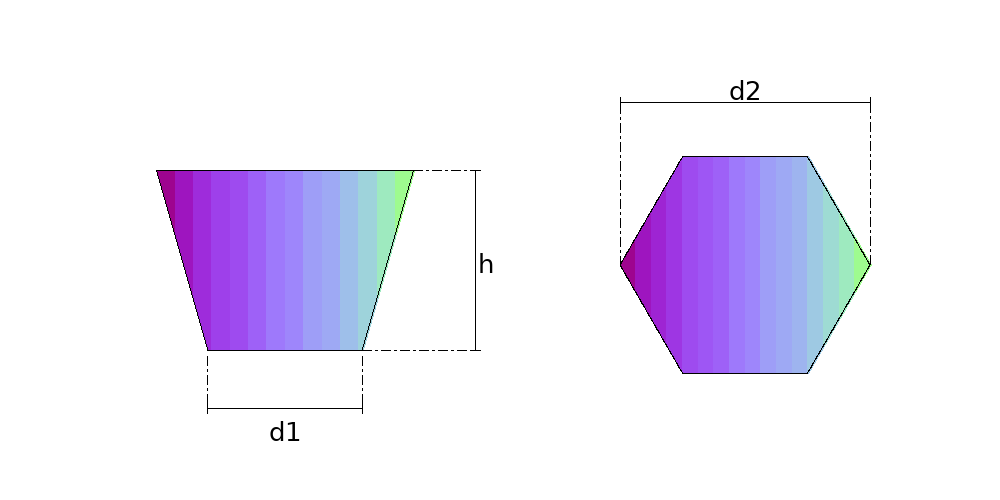
Regular Pyramid Frustum
Two coaxial regular polygons and s identical flat facets — the part behind polygonal chimney caps, hexagonal duct and cyclone baskets.
Oval to Oval Reducer
The middle piece the flat-oval run was missing: it steps the oval down without taking it out of oval. Concentric or flush-face, one number apart.