Cone and reducer development
The cone is the transition between two diameters: concentric and eccentric reducers, oblique cone, conical cap and hopper. They open into an annular sector or by triangulation, and the holed cones carry the nozzle mouth already marked on the plate.
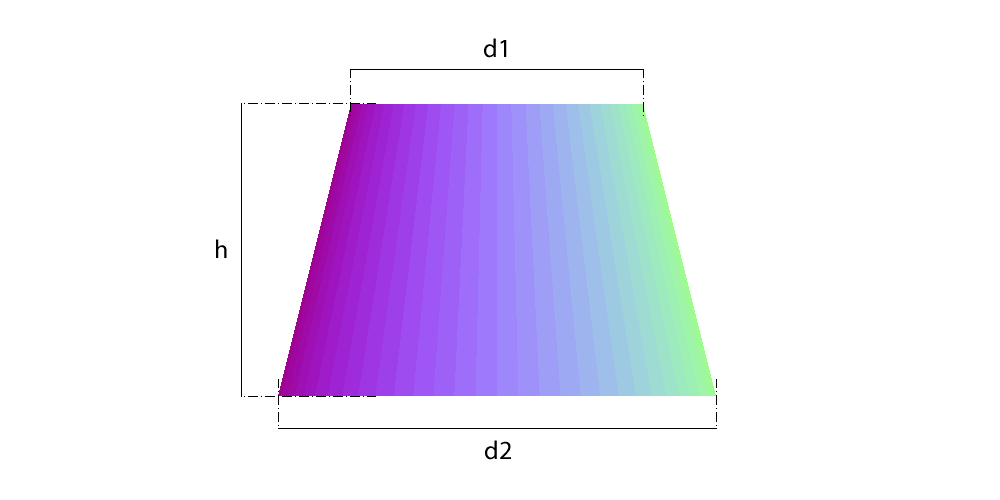
Cone
Cone (frustum) development: formula for the slant height, both radii and the sector angle, on the neutral axis. Free calculator, no account needed.
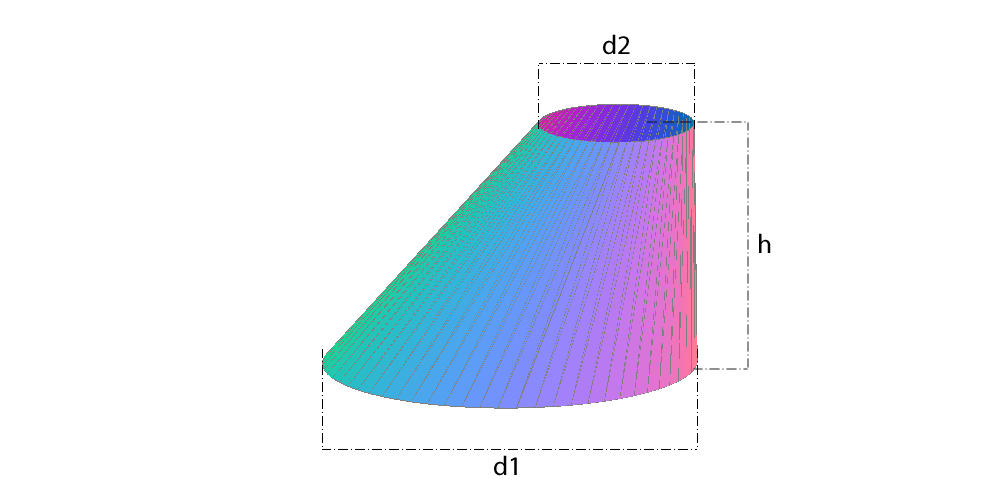
Oblique Cone
An offset transition where the two diameters share no axis, so the symmetry is gone and the pattern is solved by triangulation, strip by strip.
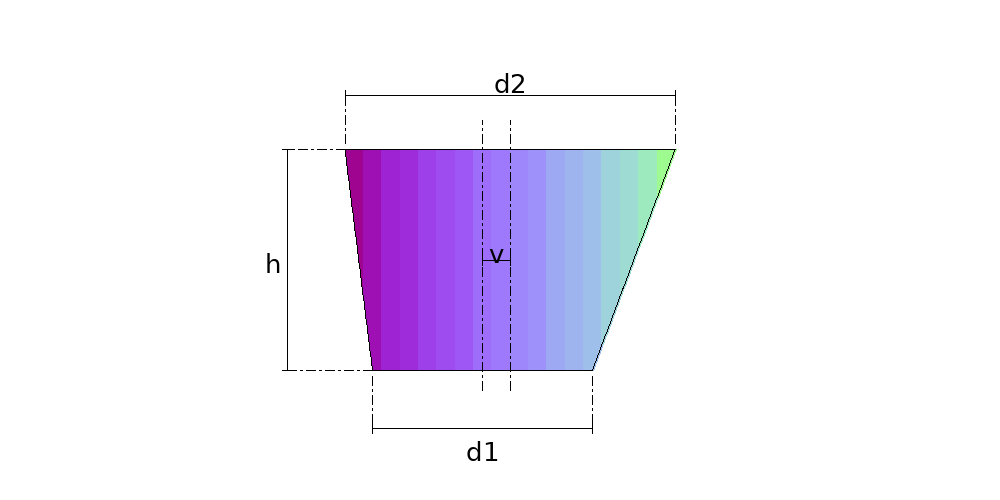
Offset Cone
The reducer whose mouths are parallel but not coaxial: you give the offset. At zero it is concentric; at tangency it is the eccentric reducer, one side plumb.
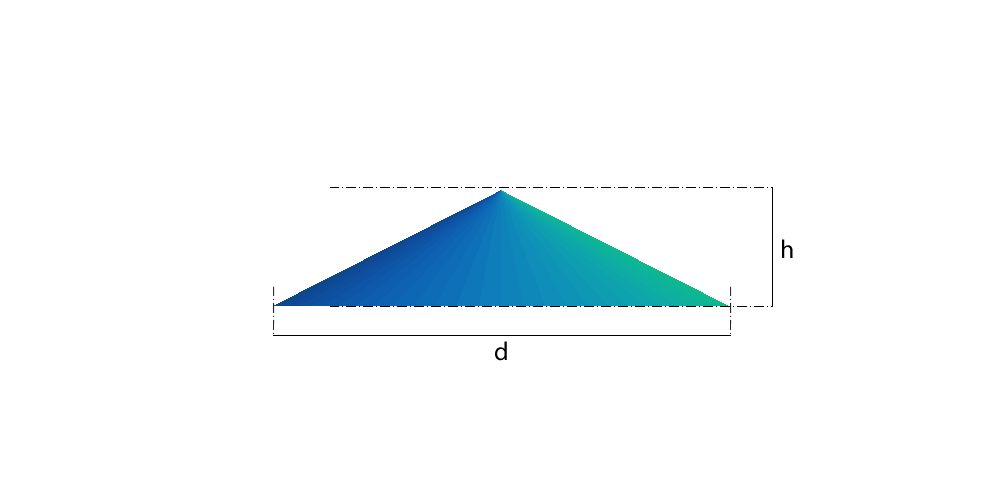
Chinese Hat
The conical cap is a full cone with no smaller mouth: a disc with a wedge taken out. The sector angle comes only from the diameter and the height.
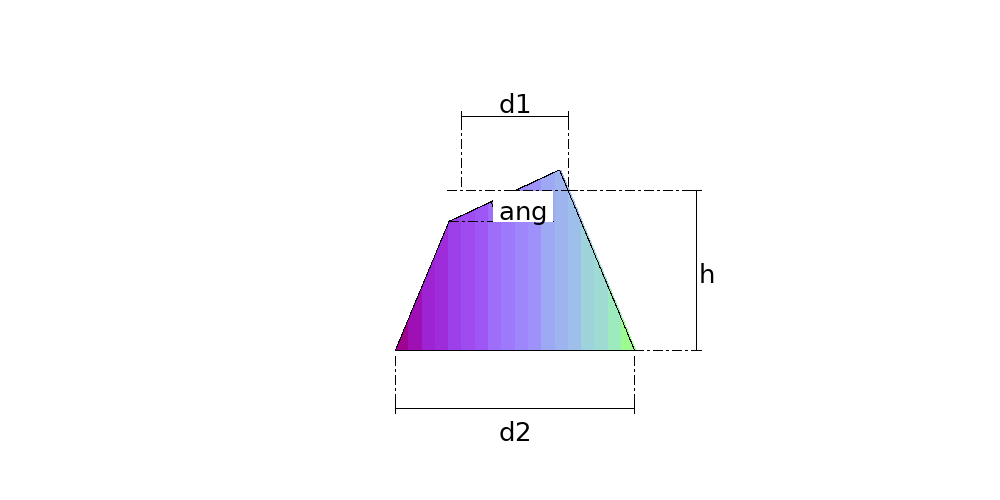
Angle Cut Cone
A conical shell with its top opening on a tilted plane. Still a sector, but the cut edge is no longer an arc — it is an ellipse projected onto the cone.
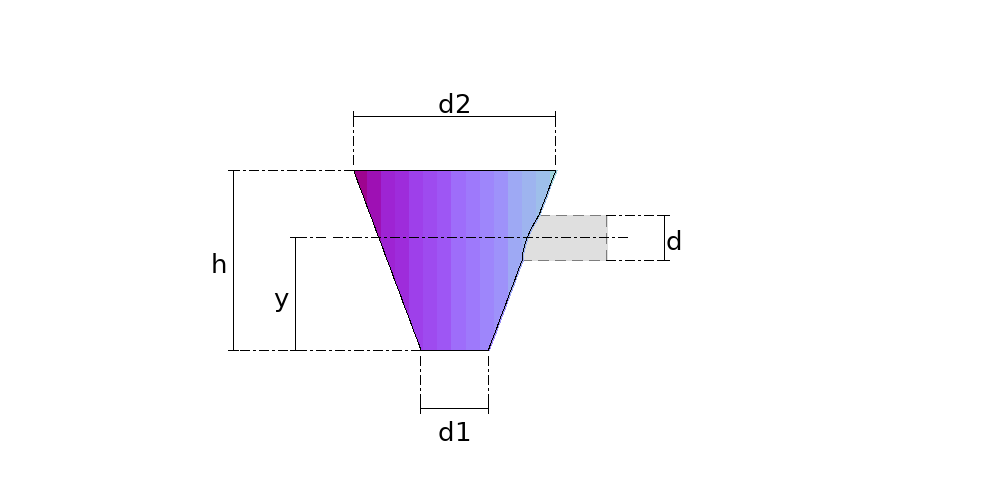
Cone with Branch Hole
The cone with the nozzle hole already marked. A cone does not open into a rectangle — it opens into a sector, and the hole curve has to be carried in.
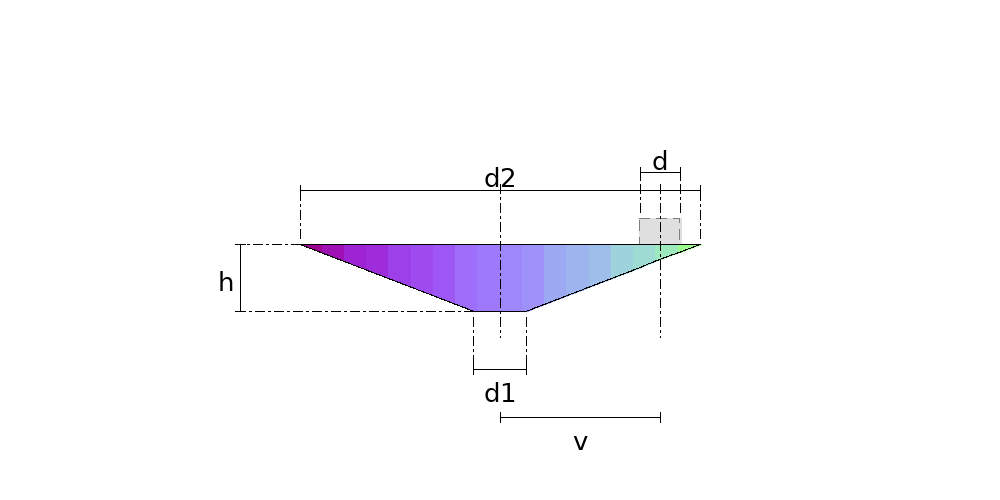
Cone with Parallel-Axis Nozzle Hole
The cone with the upright nozzle hole already marked. A cone does not open into a rectangle, and no tape will carry that hole onto the plate.
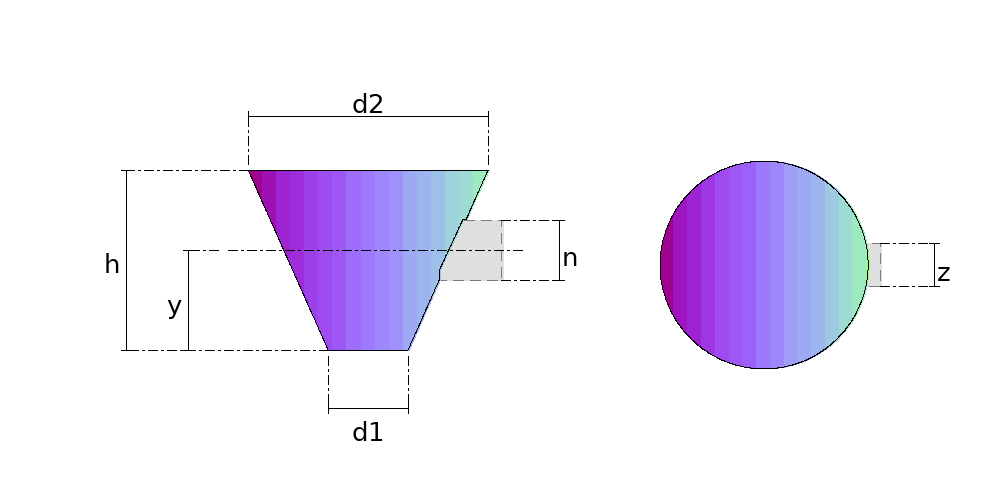
Cone with Rectangular Hole
The name misleads: the hole is bounded by two circular arcs and two hyperbolas, and on the opened sector it comes out wider at the bottom.
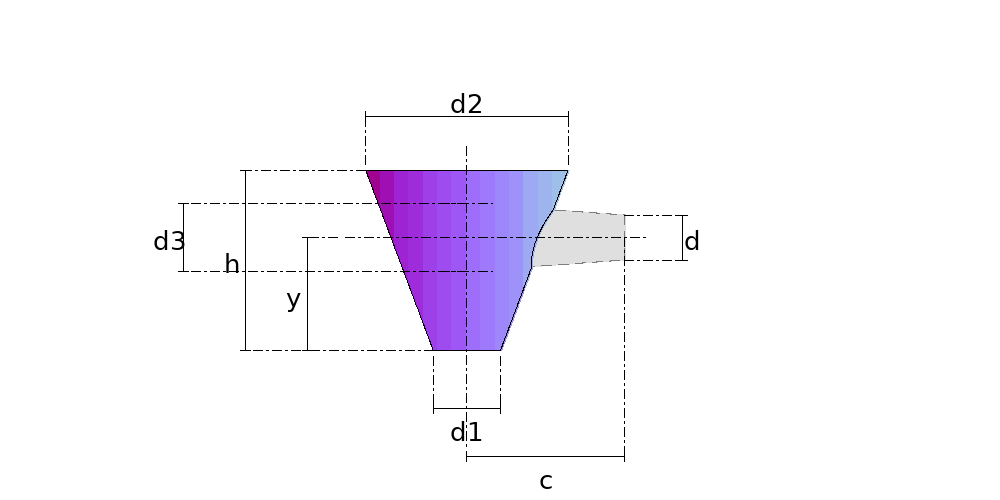
Cone with Conical Tap Hole
The hopper, silo or cyclone wall that takes a conical nozzle, marked out before rolling. Enter the same tap in both parts and both templates agree.