Elliptical, oval and rectangular tube development
The straight tube of elliptical, flat-oval (obround) or rectangular section, and the rectangular tube cut at an angle. The plate is a rectangle whose length is the section perimeter on the neutral axis.
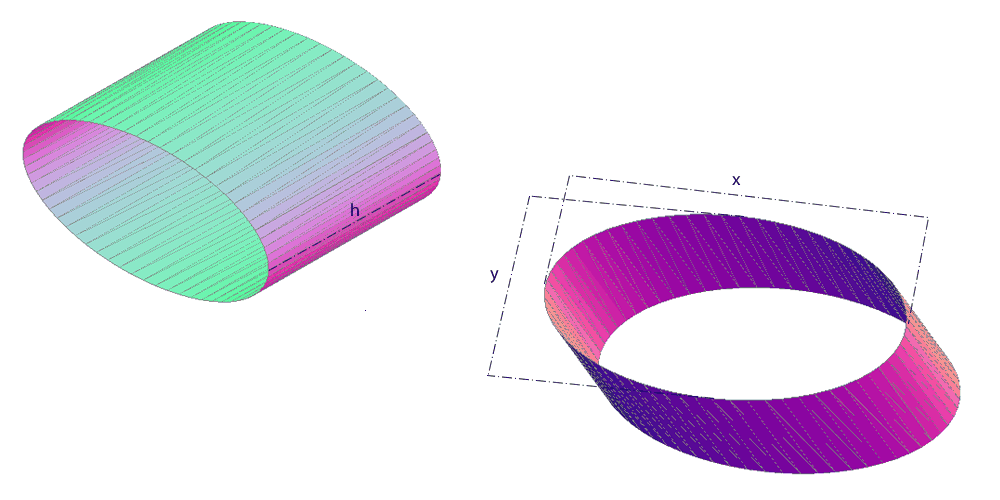
Elliptical Tube
A shell of elliptical section. The pattern is rectangular, but its length is the perimeter of the ellipse — no closed form, so it is integrated.
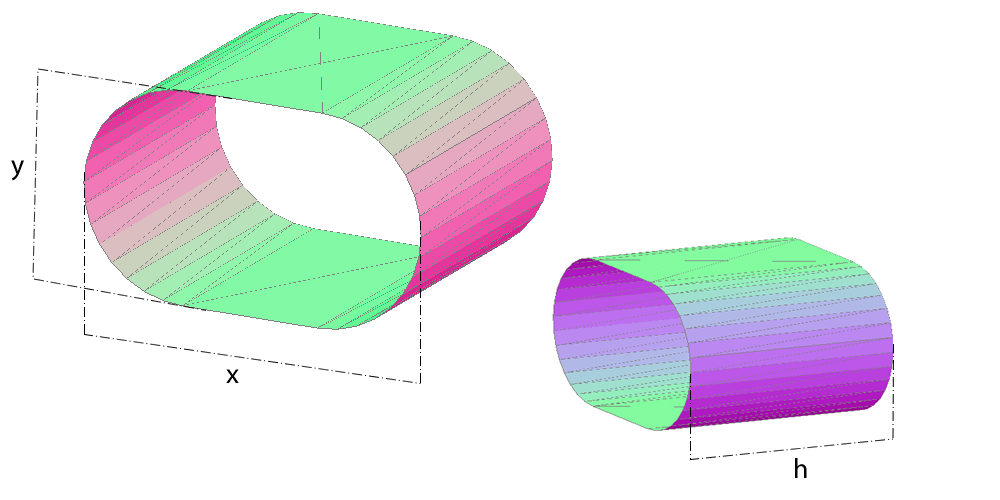
Oval Tube
The obround tube: two semicircles joined by two straight runs. The easiest shape to form after the circle — only two radii, and they are equal.
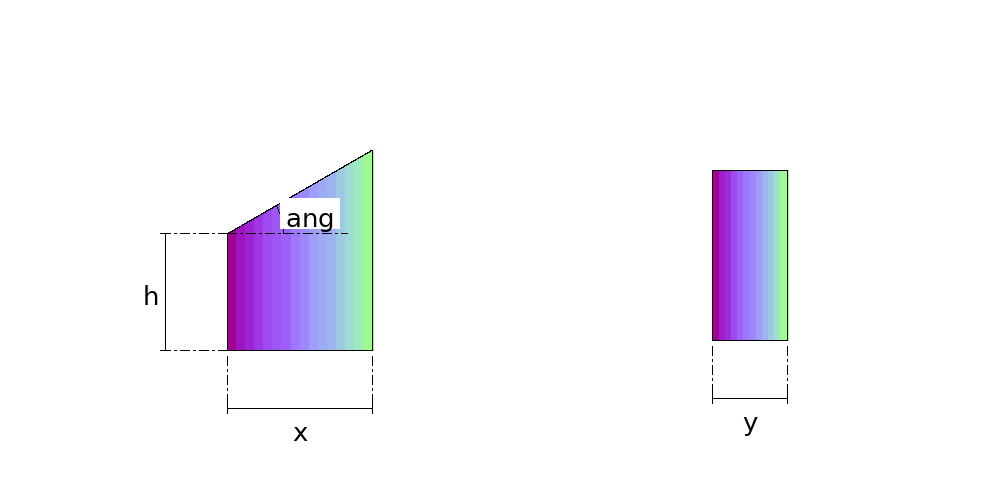
Truncated Rectangular Tube
Rectangular duct ending on a tilted plane — a roof, a sloping wall. The mouth becomes four runs: straight on two faces, sloping on the two sides.
Which tube to use
- Elliptical section, the flattened duct with a continuous curve: Elliptical Tube.
- Oval section with straight sides and semicircular ends, the obround of duct work: Oval Tube.
- Rectangular duct meeting a wall or a sloping ceiling: Truncated Rectangular Tube.
- Round section: under Rolled shells. Oval or rectangular duct bends: under Segmented bends and elbows.
What they all share
A straight tube of any section opens into a rectangle: the height is the tube height and the length is the section perimeter on the neutral axis. For the oval, the perimeter is 2 × L + π × (D − t), with L the straight side; the ellipse has no closed formula, and its perimeter is calculated numerically.
The bend or roll lines are marked on the opened plate, and an angle cut becomes a wave or a sloping straight line depending on the face. The result comes with the ordinates, the PDF template at 1:1, the DXF and the 3D view.
Frequently asked questions
- How do I work out the plate for an oval duct?
- Length = 2 × L + π × (D − t) and height = H, with L the straight side, D the width of the rounded ends and t the thickness. The Oval Tube page does the sum and marks where the plate bends and where it is rolled.
- Oval or elliptical duct?
- The oval (obround) has straight sides and semicircular ends, and it is what duct shops make: rolled at the ends, flat in the middle. The ellipse is a continuous curve with no straight run; it appears in part openings and in formed ducts. Equal dimensions give different perimeters.
- Where are the bend lines on a rectangular tube?
- On the four corners, marked on the opened plate; with the angle cut, two faces come out with a sloping edge and the other two straight. The PDF template carries the lines at 1:1.