Conduit bending
The marks on the conduit before it is bent on a hand bender: offsets, 3-point and 4-point saddles, and 90° stub-ups with the back-to-back.
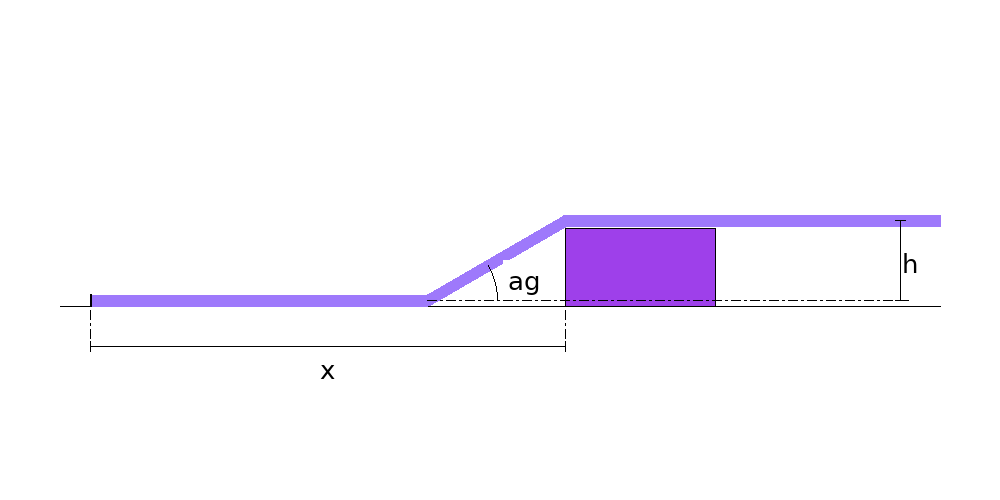
Conduit Bending (EMT)
1:1 template and DXF
Conduit bending with a hand bender: the marks for offsets, 3-point and 4-point saddles and 90° stub-ups, from the multiplier, the shrink and the take-up.
Which part to use
- Offsets, saddles and 90s in EMT, with the multiplier, the shrink and the bender take-up: Conduit Bending (EMT).
How it is calculated
Every mark is measured from the end of the conduit. An offset spaces its two marks by the depth times the multiplier for the angle; a saddle rises by the height of the obstruction; a 90 marks the stub height minus the bender take-up. The shrink, what the conduit loses as it bends, goes into the first mark.
The numbers are the manufacturer's table, cast on the bender head: check them against yours.
Frequently asked questions
- What is the multiplier for a 30° offset?
- 2: a 6-inch offset at 30° has its marks 12 inches apart. At 45° it is 1.4; at 22.5°, 2.6; at 60°, 1.2; at 10°, 6.
- Why does conduit shrink when you bend it?
- Because the angled run covers less ground than the straight conduit. The table gives how much per inch of offset, 1/4 inch at 30°, and the shrink goes into the first mark.